The Dalí Museum’s ongoing collaboration with Accenture, which helps leading organizations reinvent with technology and AI, explores how tools that offer personalized guidance can enrich the way people engage with images, including by adapting to where each person’s attention actually goes.
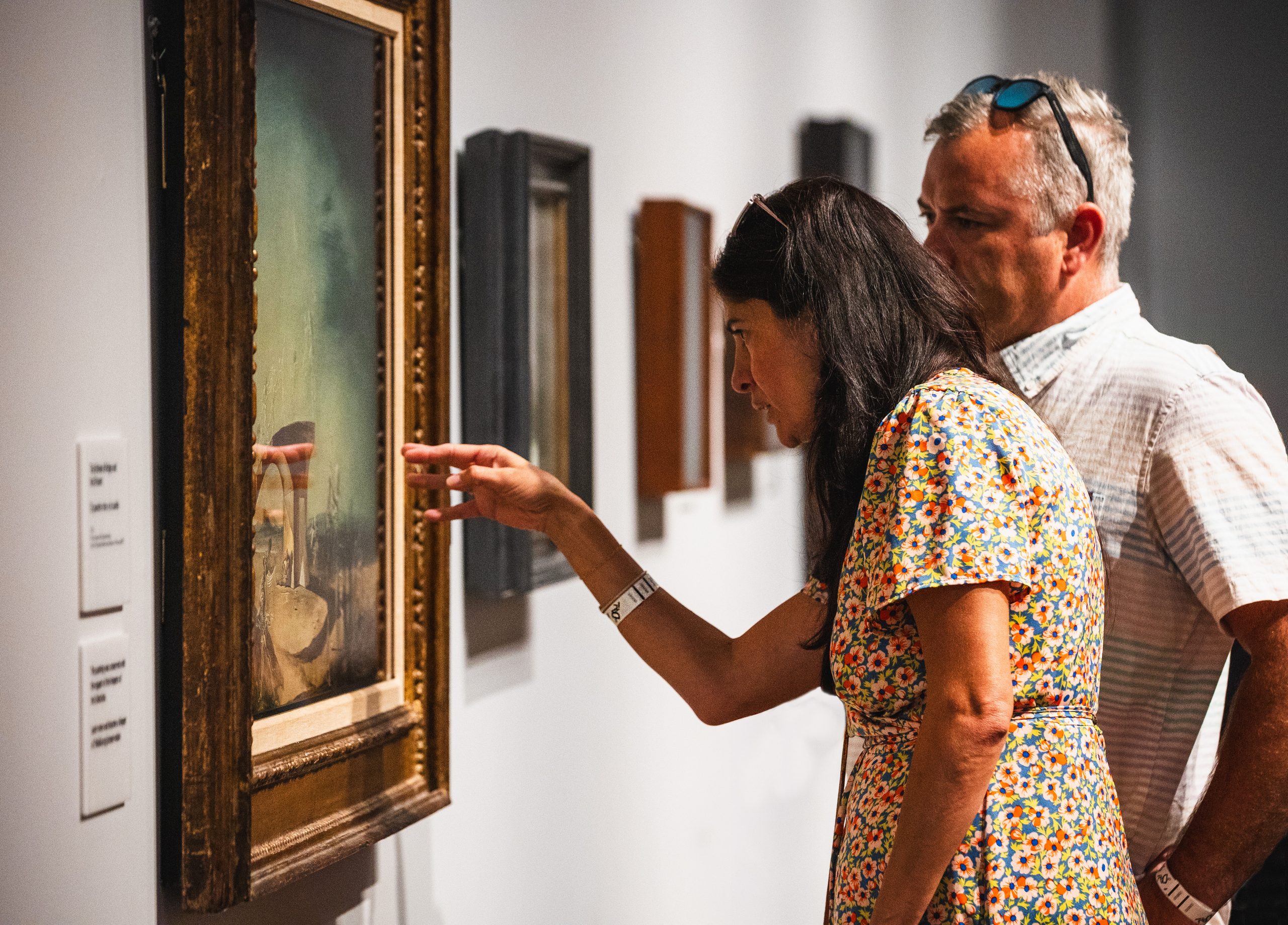
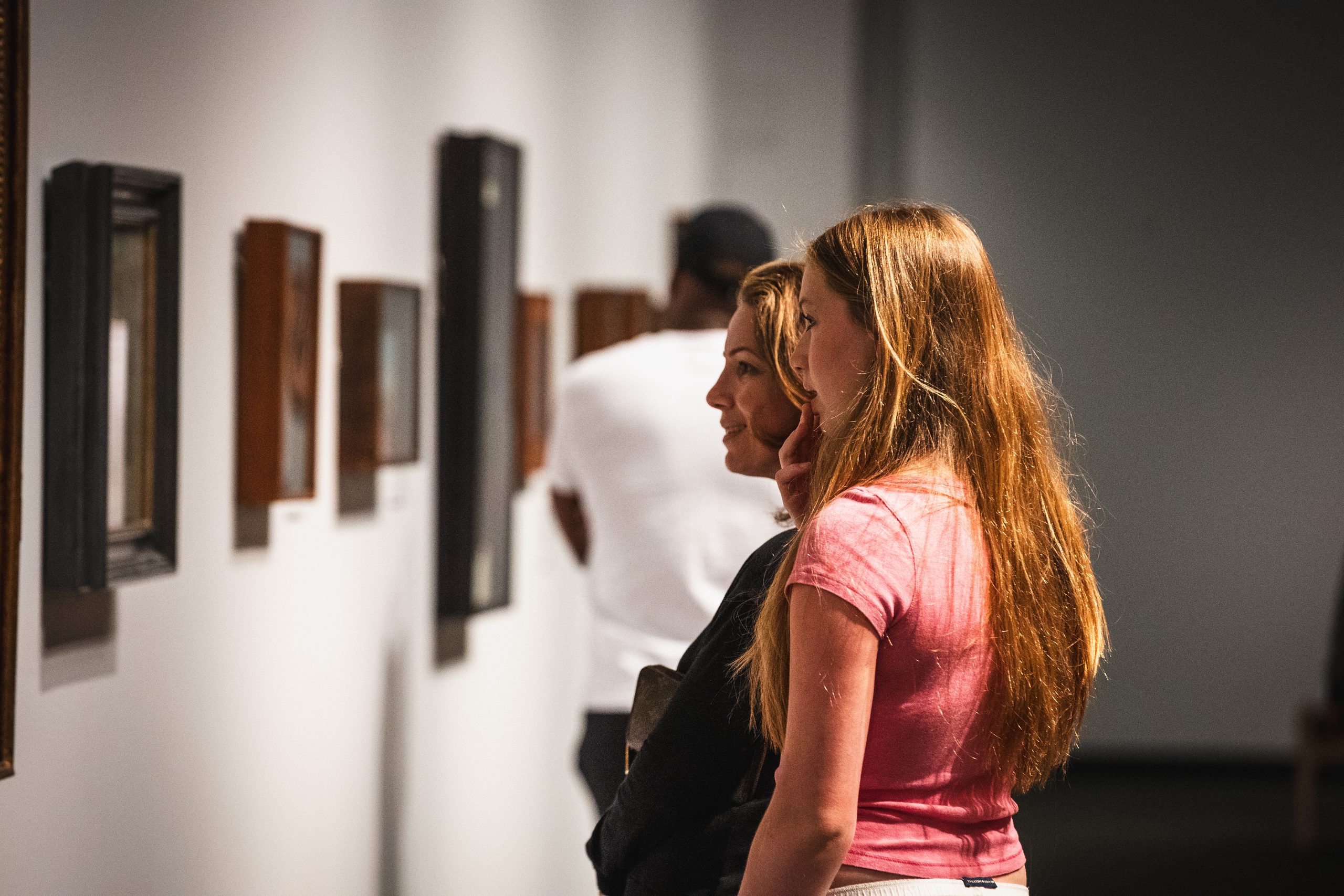
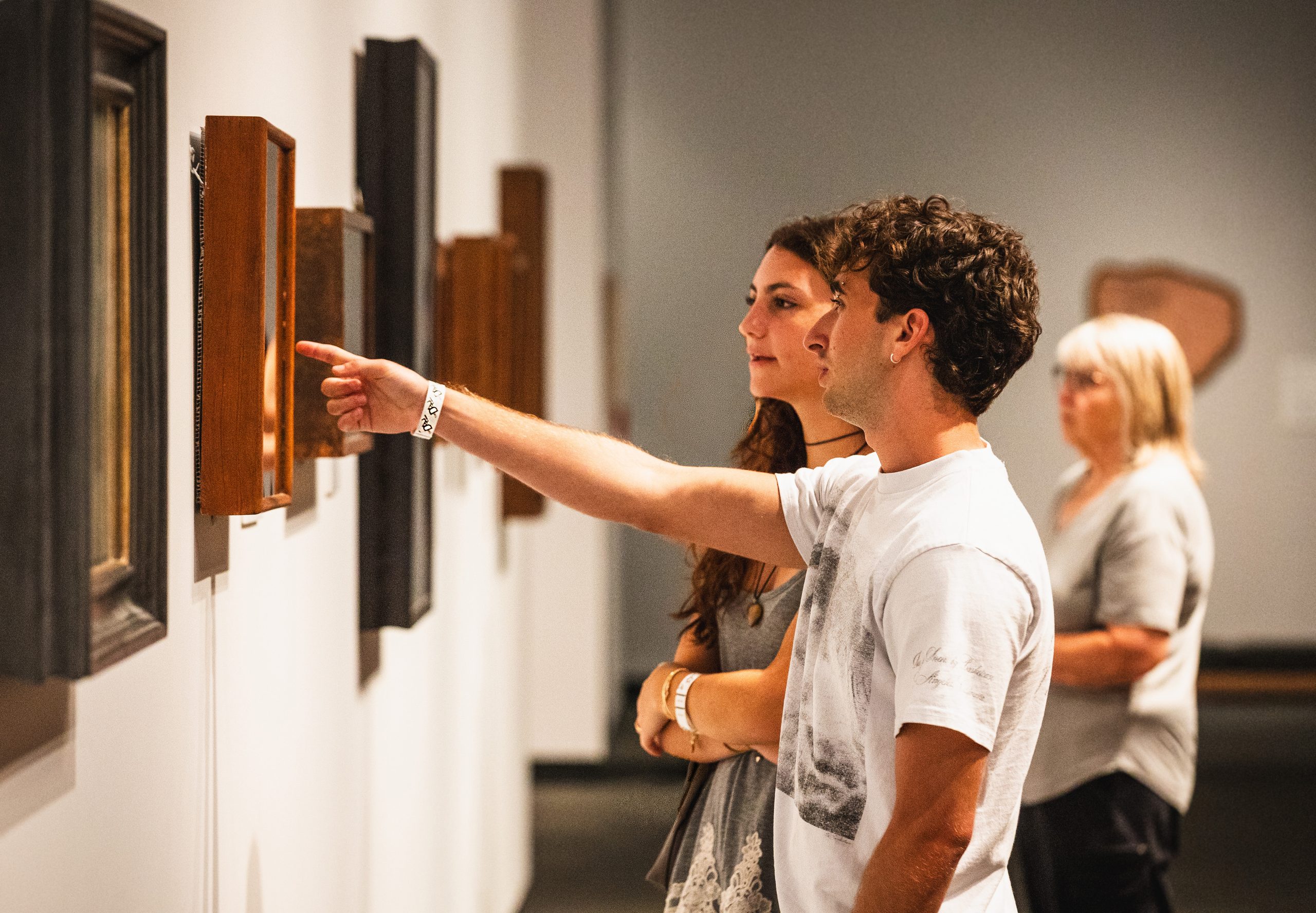
Most museum visitors give a painting only a few seconds. They glance, form an impression and move on, rarely with anything to help them reflect on what they’re seeing. A good docent, a trained guide who knows the art in depth, can enhance that experience by noticing how a visitor is looking and building on it. So The Dalí and Accenture asked a simple question: what if a work of art could respond to the way you looked at it?
The question sits where two kinds of expertise meet: the Museum’s understanding of how people encounter art, and Accenture’s work on how people and technology work well together. As AI becomes an everyday tool, both teams are drawn to an experience that adapts to people as they move through it, offering help in the moment without asking them to stop and explain what they need.
“Looking is itself a creative act. We synthesize the world we direct our gaze toward. If we can find more insightful ways of looking, we can learn to think beyond the ordinary bounds.” — Hank Hine, Executive Director, The Dalí Museum
The Questions We’re Exploring
This is early, exploratory research, shared as it unfolds. The gallery is where the ideas are tested, but the questions reach into how people look and learn more broadly.
- Can an experience show people how they looked at a work and help them reflect on it? Helping people see their own way of looking could be valuable anywhere close observation matters.
- Can visitors build on how an expert looks at a work? The Museum explores this with its docents, but the same opportunity exists wherever newcomers enter a subject, from classrooms to hands-on training in skilled trades.
- What do visitors notice that docents don’t expect? Where fresh eyes and practiced eyes diverge is something to learn from in both directions, in the gallery and in fields like medicine and design.
How Do I Look?
The idea began at the Museum in a project with Dartmouth that pioneered eye tracking to give visitors feedback on how they looked at a work, paired with curated notes about the art. Our work with Accenture uses AI to add additional feedback personalized to each visitor’s own way of looking.
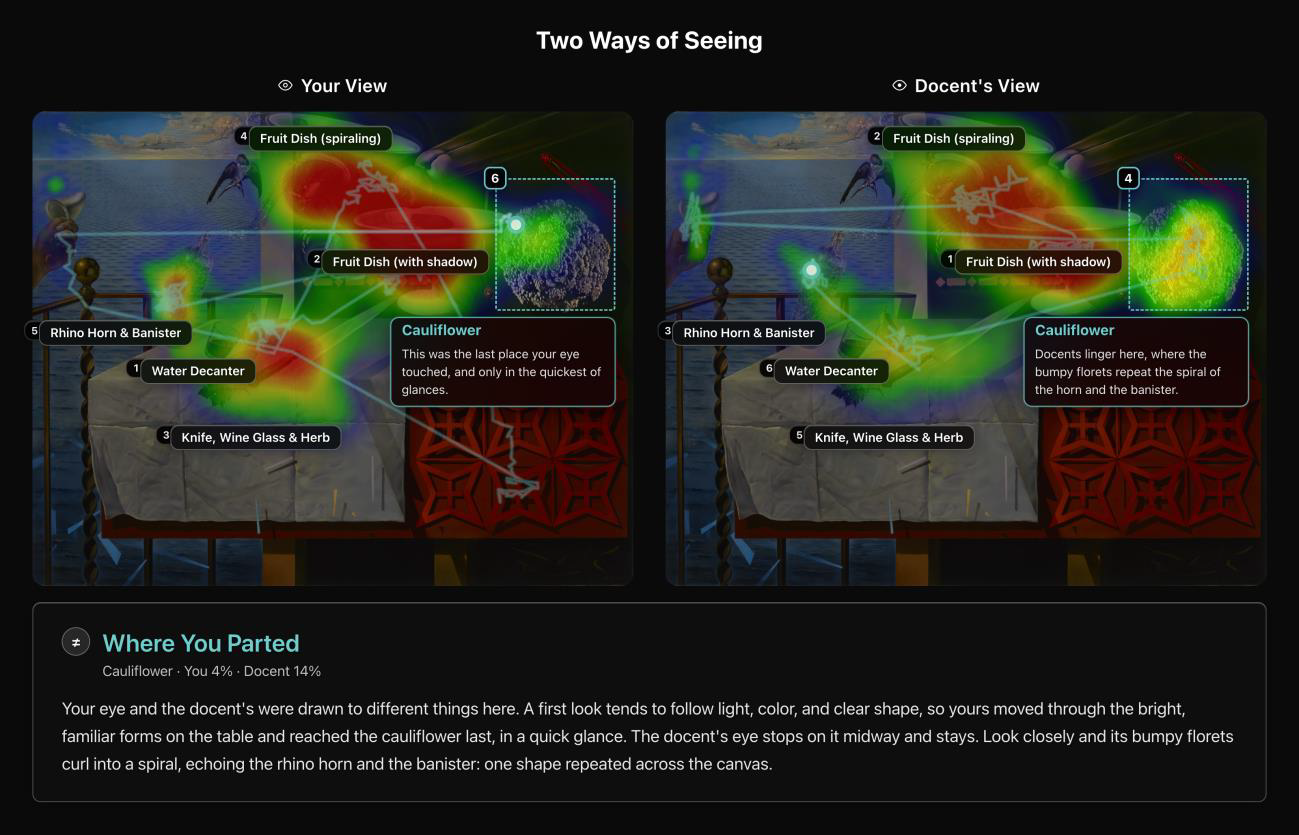
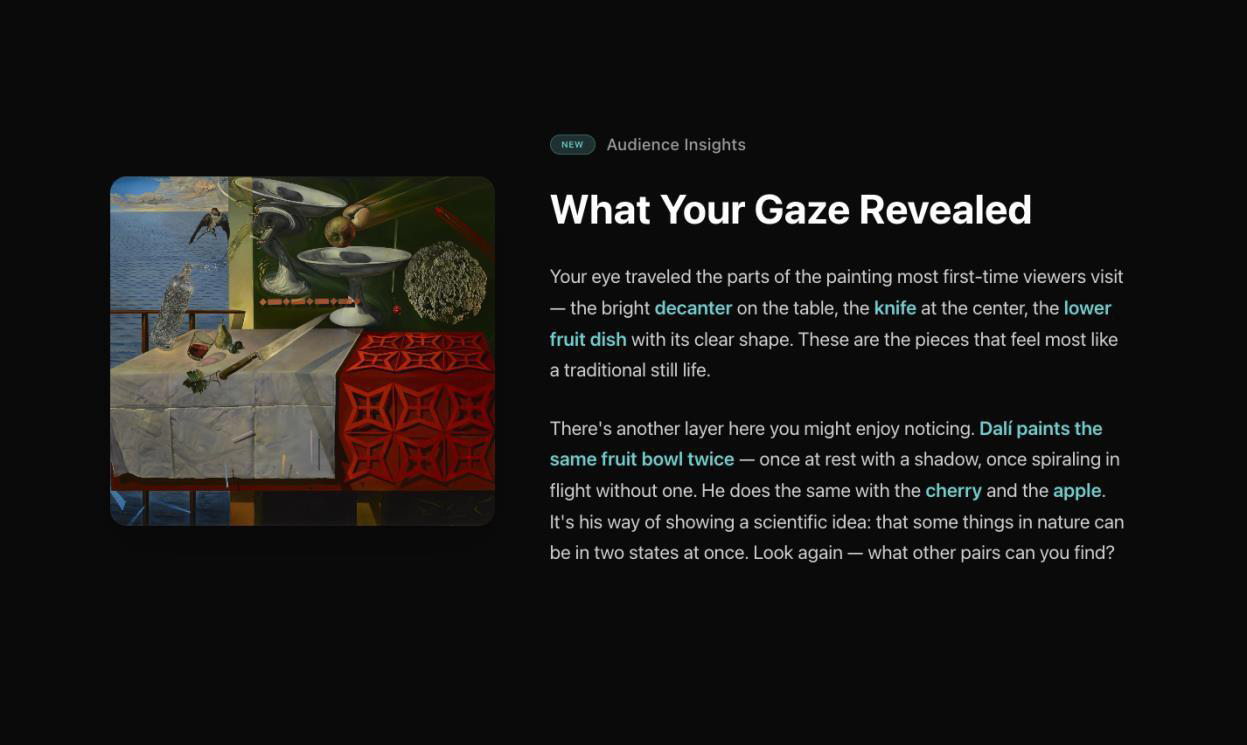
In the experience called How Do I Look?, a gaze sensor follows where a visitor’s eyes travel, linger and pass over a painting. Afterward, visitors see their viewing path played back, receive a brief a brief, AI-generated reflection on elements of the painting tailored to how that viewer looked, and compare it with how a docent viewed the same work. The experience is short, self-guided and unique to each visitor.
Behind the scenes, each viewing pattern becomes a personalized reflection grounded in the Museum’s knowledge of the artwork. The project combines The Dalí Museum’s expertise in art and visitor experience with Accenture’s applied AI research and human-centered technology—creating an experience for visitors and a research platform for both teams.
A Bigger Idea
For The Dalí, this extends a long-held belief that looking closely is a skill worth sharing. In a world increasingly made of images, the ability to slow down and read them with attention is a broadly human need, and a museum, where close looking is the point, is a generous place to explore it.
What’s Next
The teams are curious about what comes after a single visit. Could the experience help people keep looking in new ways beyond the gallery, hold a short conversation about what they saw, or reveal patterns across many visitors that might surprise even the docents?
The same approach of noticing how you look, seeing how others look and continuing to explore could help in education and visual literacy, professional and clinical training, media literacy and design. The Museum remains the place where these ideas are tested first.
“We were drawn to a simple starting point: pay attention to where someone looks, and you learn something about how they see. The Dalí turned out to be the perfect place to explore that with real people and real works of art.” — Alex Kass, Digital Experiences R&D Group Lead, Accenture
None of this replaces the quiet, personal act of standing in front of a painting. The hope is a modest one: to help a few more people notice how they look, and to explore together what that can open up.
About Accenture
Accenture helps the world’s leading organizations reinvent by building their digital core and unleashing the power of AI, serving approximately 9,000 clients across industries. Learn more at accenture.com.
Project Team
Accenture:
Alex Kass, Digital Experiences R&D Group Lead
Adolfo G. Ramirez-Aristizabal, R&D Principal Michelle Gelman, Research Engineer
For media inquiries, contact PR@TheDali.org